
Setting sights on disease prevention
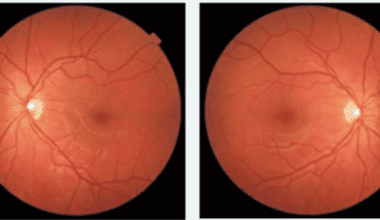
The eyes are a window into a person’s health: the state of the tiny blood vessels and nerves at the back of the retina gives important clues for doctors to spot signs of a wide range of conditions, such as diabetes, heart disease, stroke and Alzheimer’s. That’s why the Scottish Collaborative Optometry Ophthalmology Network e-research (SCONe) project, led by Professor Baljean Dhillon and Professor Miguel Bernabeu, has amassed 1.5 million retinal images from optometrists across Scotland and moved them to Public Health Scotland’s National Safe Haven, a secure data environment.
Here, the SCONe team is using AI and deep learning to analyse these images. The data is linked to individual health records through unique NHS identifiers, enabling the potential development of personalised risk estimation for diseases and allow early interventions. Over the past five years, SCONe has grown into a worldleading project and is now looking at how predictive healthcare can be translated into health pathways in the NHS.
Professor Dhillon, NES Professor of Clinical Ophthalmology at the Centre for Clinical Brain Sciences at the University of Edinburgh, said: “SCONe is a very successful collaborative project. This retinal scan collection – the world’s largest dataset at a population level – unlocks a major resource in terms of trying to understand the retina and neurovascular health of a large number of individuals over a period of time that would otherwise not have been accessible.
“Part of the challenge has been around ensuring that we have a pathway across clinical medicine, optometry, data science, informatics and AI that would allow us to really make the most of this resource, which is why the partnership that we formed with Professor Bernabeu has been so fruitful. He enabled us to capture the data set, which is sitting in the retinal image, and analyse that in a useful, meaningful and novel way.”
Professor Bernabeu, Professor of Computational Medicine at the University of Edinburgh, said: “As my team sits at the Usher Institute, a Health and Social Care Data-Driven Innovation Hub, we are working in an environment which is very rich in expertise and full of like-minded folks interested in innovation in healthcare driven by data.”
BRAIN HEALTH
One of the translational components the team is looking at is prediction modelling of cognitive health based on a retinal photo. SCONe has the potential to track brain health through midlife via retinal scans. By giving people an individualised risk estimation, they can make lifestyle changes to stop the onset of dementia. Professor Dhillon said: “It’s going to have a big impact on how we approach brain health. You could say ditto for any microvascular disease because the retina is the barometer of microvascular disease in the central nervous system.” Professor Bernabeu added: “Now we need to come together as an interdisciplinary group of clinicians and data scientists and understand how this technology can be translated. It’s designing how clinical pathways can be refined, or developing new clinical pathways.”
Professor Dhillon said: “We also have to demonstrate the value of our findings to the public and large chains of optometrists that this is of value… [to ensure] it gets used and ultimately preserves and improves health at population level.”
Read the latest Case studies

Introducing systems convening
Across Scotland’s public services, there are increasingly rich data sets on health, education, housing, justice,…

Compassionate financial services
The “science of compassion” is being harnessed to help create a more inclusive and sustainable…
Making quantum power accessible
Qinara is delivering tomorrow’s performance today. This trailblazing team, who met at the University of…