
Fungi-powered forest restoration
A flourishing biotechnology business based at the Easter Bush Agritech Hub has been awarded £4.5 million in investment to support its innovative approach to forestry and woodland restoration.
The funding for Rhizocore Technologies, announced in November, follows the receipt of £1 million from the Department for Environment, Food and Rural Affairs (DEFRA) in February 2025. The company’s success, expansion and the speed and scale of its growth highlights how support from DDI and the University of Edinburgh can help budding entrepreneurs take ideas and transform them into successful business ventures.
Rhizocore was founded in 2021, beginning as a start-up through the University’s Food & Agriculture Science Transformer (FAST) programme, which is a joint venture with Deep Science Ventures (DSV). The programme brings together the Roslin Institute’s world-leading expertise and facilities with DSV’s market-led approach to creating science companies.
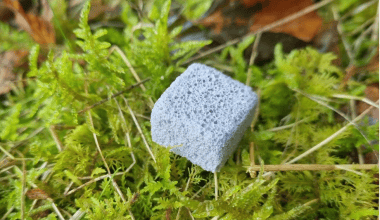
The FAST programme allowed Rhizocore founder Dr Toby Parkes to spend a year looking at controlled environment agriculture and other areas within agritech to assess room for new ventures. He discovered that, despite ectomycorrhizal fungi being natural fertilisers for trees, forestry and woodland regeneration groups were not using these organisms. He then launched Rhizocore and RhizoPellets™ – fungal pellets that create essential underground networks to support tree growth.
Dr Parkes said: “PhDs teach you how to solve problems. People generate start-ups when somebody solves a problem that is commercially viable. FAST gives PhD students, postdocs and young career researchers the space to analyse possibilities and consider the kind of companies they might generate with the support of a salary.”
Success
Dr Parkes explained that beneath nearly every forest floor is a network of fungi that supplies essential nutrients to trees through their roots. However, when trees are felled, these fungi quickly die – making replanting challenging.
This results in slower growth, higher tree mortality rates and reduced carbon sequestration. RhizoPellets™ are locally adapted mycorrhizal fungi that help improve forest productivity. At one partner site in North Lanarkshire, trees treated with RhizoPellets™ showed a 97% survival rate after a year – compared with 78% for untreated saplings.
Trees grow up to 50% faster and capture 20% more carbon. Dr Parkes said: “Planting success can be dramatically improved by restoring the below-ground networks that make forests thrive. The end goal is making forestry generate more quickly so that woodlands can be established faster and be more resilient to environmental stresses.”
Investment
The £4.5 million investment secured in November will support Rhizocore’s expansion into North America and fund an increase in production capacity at the company’s facility at Roslin.
The funding round was led by the First Thirty, a specialist investor in technologies to improve soil health. It also includes participation from Scottish Enterprise and the Grosvenor Estate. Additional investors are Sand River, Generation-Re (Regenerative Agriculture Syndicate), Kibo Invest, John Thomson and Old College Capital, the University’s in-house venture investment fund. Dr Parkes said: “This will accelerate our business scaling plans, unlock new markets and advance our mission of protecting, harnessing and restoring fungal biodiversity.”
Growth
Val Hughes-White, Roslin Innovation Centre (RIC) and Agritech Innovation Director, said: “RIC is delighted to be able to support the continued growth and evolution of Rhizocore Technologies. Dr Parkes actively contributes to the RIC ecosystem, engaging in events and supporting start-ups in the agritech sector with his insight and expertise to enable others to grow and thrive.”
Visit the website: rhizocore.com
Read the latest Case studies

Introducing systems convening
Across Scotland’s public services, there are increasingly rich data sets on health, education, housing, justice,…

Compassionate financial services
The “science of compassion” is being harnessed to help create a more inclusive and sustainable…
Making quantum power accessible
Qinara is delivering tomorrow’s performance today. This trailblazing team, who met at the University of…